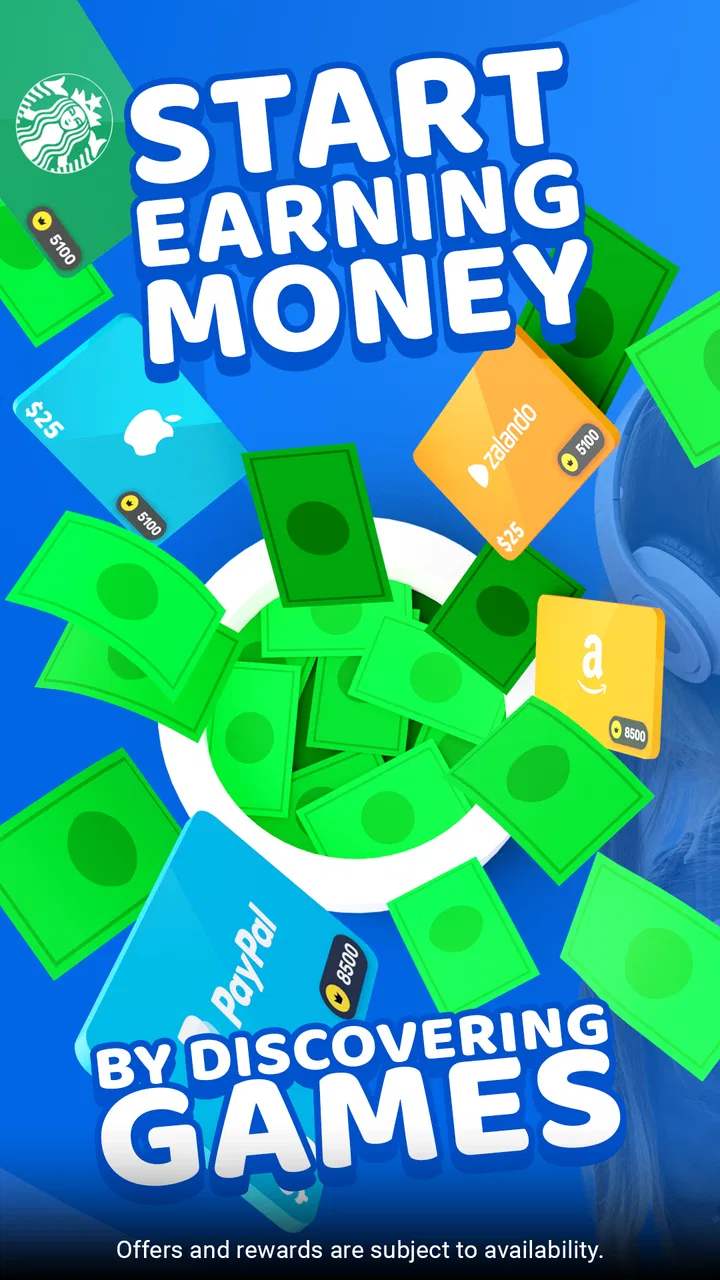
Money Well - Games for rewards
- 4.4
- Rating
- 10.00M
- Installs
- Free
- Price

 Analysis by App-foxy
I approached Money Well as a small lifestyle tool rather than as a serious income source. Its basic idea is simple: you play selected mobile games, collect points through that activity, and exchange those points for gift cards. That makes the app appealing if you already enjoy casual games and would rather turn spare minutes into a modest reward than spend them scrolling through social media.
My main question while using it was not whether it could replace a job, because it clearly is not designed for that. The more useful question is whether the extra steps, game time, and patience feel worthwhile compared with ordinary mobile gaming or other reward apps. In my experience, the answer depends heavily on how you play. If you treat it as a bonus layer over entertainment, it can be enjoyable. If you expect fast, predictable cash, you are likely to become frustrated.
How I judged Money Well before committing time
The first decision point is your preferred reward. Money Well focuses on exchanging points for gift cards, so it suits people who are comfortable receiving value in that form. It is less suitable if you need money transferred directly for a bill, want a guaranteed hourly return, or dislike reward systems that ask you to build progress gradually.
You May Also Like

 Blood Strike: 2.5 Anniversary
Blood Strike’s Loadouts Turn Every Drop Into a Tactical Gamble
A close look at Blood Strike’s custom loadouts: how fast access to signature weapons reshapes its battle royale rhythm, rewards preparation, and narrows the gap between fights.

 Pandora - Music & Podcasts
Pandora’s Music Is Easy to Start, but Harder to Recover
Pandora’s strength is its low-effort path from a seed to a station. Its weak spot is how much confidence it asks you to place in connection, setup, and quiet recovery.

 8 Ball Pool
 Is Built on Rivalries, Rematches, and Routine
A close look at the rivalries, rematches, shared routines, and unanswered safety questions that turn a quick pool match into a persistent mobile community.

 Samsung Music
’s Quiet Strength Is Playing What You Already Own
Its reach comes less from spectacle than from dependable access to a personal library. That simplicity is both the app’s strongest retention engine and its ceiling.

 AccuWeather: Weather Radar
AccuWeather Review: A Quick, Clear Forecast for Everyday Decisions
For everyday plans, the best forecast is the one you can understand quickly. AccuWeather makes rain timing, radar, and local conditions easy to act on, with a few trade-offs.

 Hill Climb Racing
Why Hill Climb Racing Still Turns Crashes Into One More Run
A tiny car, a bumpy hill and one more upgrade: Hill Climb Racing keeps resurfacing because its simple chaos makes every near-miss feel personal.
More From Our News Desk
View All News


I also considered how much control the app gives the user over the time spent. A reward game can look attractive at first, but the real cost is often attention. Ten spare minutes here and there feels very different from repeatedly checking progress, switching between tasks, and continuing longer than planned because a reward seems close. I recommend deciding in advance how much time you are willing to give it each day.
The app is free, which removes the financial risk of trying it. That does not make the experience costless, though. You still exchange battery, data, screen time, and attention for points. For me, that trade-off works best when the games are already close to what I would choose for casual entertainment. If I had to force myself through a game I did not enjoy, the reward would feel much less attractive.
Money Well is a lifestyle app from Money Well, and its presentation is aimed at ordinary phone users rather than experienced reward hunters. It has a Teen content rating, which is worth keeping in mind for families deciding whether it is appropriate for a younger user. I would still encourage parents and teenagers to discuss screen-time limits and the difference between gift-card rewards and dependable income.
The first session tells you more than the headline
When I begin with an app like this, I do not immediately plan a long session. I look at how clearly the available games are presented, how easily progress can be understood, and whether the reward path feels readable. That short trial is important because it prevents a common mistake: investing hours before discovering that the available options do not match your interests.
A practical approach is to choose one game and observe how it fits into your routine. Do not install several options at once simply because they appear available. Keeping one activity in focus makes it easier to judge whether you are actually enjoying yourself and whether the points feel like a reasonable extra. It also reduces the temptation to chase every visible opportunity.
Another useful habit is to separate entertainment from earnings in your mind. The points are a bonus, not a salary. That distinction helps you stop at a sensible moment instead of continuing purely because you have already spent time. In reward apps, the feeling of being “almost there” can be more powerful than the actual value of the reward, so setting a personal limit is one of the smartest ways to use Money Well.
Where the app is most convincing
The strongest part of Money Well is the way it connects a familiar activity with a simple reward goal. Many people already play short games while waiting for transport, sitting in a queue, or taking a break. Adding points to that routine can make those minutes feel more purposeful without requiring a separate skill or complicated financial setup.
I also like the low barrier to entry. You do not need to understand investing, sell products, complete professional tasks, or build an audience. The concept is immediately understandable: play, accumulate points, and exchange them for gift cards. That clarity makes it easier for a casual user to try than more elaborate side-income platforms.
The gift-card focus can be useful for small planned purchases. For example, someone might use occasional rewards toward entertainment, a digital purchase, or a present they were already going to buy. The important word is “occasional.” I would not organize a household budget around the app, but I can see the appeal of letting small rewards offset a minor discretionary expense.
Its popularity also gives it a certain reassurance for people who prefer established apps. Money Well has passed ten million installs, carries an average rating of 4.4 from around 619 thousand ratings, and has about 17 thousand written reviews. Those figures do not guarantee that every user will have the same experience, but they show that the app has attracted a substantial audience rather than being an obscure experiment.
A realistic everyday use case
Imagine a student waiting between classes or a commuter with a short break. Instead of opening several unrelated apps, they choose one Money Well game, play for a limited period, and then stop when the break ends. The reward is not large enough to justify missing an appointment or delaying homework, but it can make an otherwise empty interval feel slightly more useful.
That scenario captures the app at its best. It works as a companion to time you had already decided to spend casually. It becomes less appealing when the game replaces sleep, study, work, or time with family. I would especially avoid using it as a reason to keep a phone in hand throughout the day. The points should follow your routine, not control it.
There is also a useful psychological advantage to choosing a reward target before you start. If you know what kind of gift card would be genuinely useful, the points have a purpose. Without that goal, the process can become an endless loop of collecting and checking. A clear target makes it easier to decide whether the time spent feels worthwhile.
Small habits that improve the experience
My first practical tip is to treat the app as a single-session activity rather than a constant background task. Open it when you have a planned break, play one selected game, and close it when the break is over. This keeps the reward from expanding into every spare moment and gives you a more honest sense of the value you are receiving.
Second, pay attention to enjoyment before progress. If a game feels irritating after a few sessions, no points total will completely fix that feeling. The best match is a game you would willingly play for a short time even without the reward. That approach also protects you from spending longer than intended just to justify the time already invested.
Third, keep your expectations conservative until you have personally tested the full journey from play to redemption. Seeing points accumulate is not the same as receiving a gift card. I would first learn how the app feels in normal use, how clearly the exchange process is presented, and whether the available reward choices fit my needs before making it part of a regular routine.
Finally, remember that a free app can still have a meaningful opportunity cost. If you have a limited data plan, a low battery, or an important task waiting, Money Well should come after those priorities. That sounds obvious, but reward mechanics are designed to encourage continued engagement, so a deliberate stopping rule is genuinely useful.
Where the friction becomes noticeable
The central limitation is that points are tied to game activity rather than to a predictable work rate. Your experience can therefore feel uneven. One session may be entertaining and productive, while another may feel like too much effort for too little progress. Anyone looking for a fixed return will probably prefer a different kind of platform.
There is also a motivational trade-off. The reward can make a game more interesting, but it can also make an ordinary game feel like a task. Once I start judging every minute by the points earned, the relaxation disappears. That is why I would not recommend Money Well to someone who already struggles to limit gaming or who tends to continue activities because a target is nearby.
Gift cards are convenient for some users, but they are not as flexible as unrestricted money. Their usefulness depends on whether the available choices match your spending habits. A person who rarely uses gift cards may find the reward less valuable than someone who already shops through the relevant brands. This is an important difference from platforms built around broader forms of payment.
Another point is patience. The app’s concept promises a route to rewards, not instant earnings. If you install it expecting a quick result from a single short session, the experience may disappoint you. I would approach it with the same mindset as collecting loyalty points: worthwhile when it happens alongside something you enjoy, but not worth rearranging your day around.
How it compares with the usual alternatives
Compared with ordinary casual games, Money Well adds a reason to return, but it may also add pressure. A normal free game can be judged entirely by its entertainment value. Here, you are judging both the game and the reward journey. If you want pure relaxation, a conventional game may be the better choice because it does not turn every session into a calculation.
Compared with survey or task-based reward apps, Money Well is more active and game-oriented. That is a strength for people who dislike answering questions or completing repetitive forms. On the other hand, task platforms may feel more direct to users who prefer knowing exactly what activity they are completing. Someone who enjoys structured, clearly defined tasks may find game-based progress less satisfying.
Compared with cashback services, the difference is even clearer. Cashback usually connects a reward to a purchase you were already making, while Money Well connects it to play time. If you shop regularly and want rewards without adding screen time, cashback may fit your habits better. If you do not shop often but enjoy mobile games, this app may be more natural.
Compared with freelance or micro-work platforms, Money Well is easier to start but offers less control over income. It does not ask you to market a skill or meet a client, which is convenient. However, users who need reliable earnings should look at work-based alternatives instead. The convenience here comes from its casual nature, not from financial predictability.
What switching away really means
Trying Money Well costs little because it is free, but switching between reward apps can create a hidden cost: divided attention. Each service may encourage you to learn a different progress system, remember different goals, and spend time checking different balances. If you keep installing alternatives without evaluating them, you may end up spending more time managing rewards than enjoying the activities.
I suggest giving the app a short, clearly bounded trial. Choose one routine, decide what would count as a satisfying experience, and then review your own reaction. Did you enjoy the games? Did the points feel like a pleasant extra? Did you find yourself checking constantly? Those answers are more useful than simply comparing the largest-looking reward promise.
The current version is 5.3.4-MoneyWell, and the app supports Android 7.0 and later. That makes it accessible to people using older compatible Android devices, although the practical experience will still depend on the phone and the games being used. I would keep the app updated through the normal store process and avoid judging it solely from a single session if the phone is struggling with general performance.
Because the app is available at no purchase price, there is no subscription decision to make before testing it. The real switching question is whether you want to keep giving it your time. If the games replace another reward app, compare not only the redemption format but also which activity you would genuinely choose when no reward were attached.
Who should install it, and who should skip it
I would recommend Money Well to casual gamers who already have short periods of free time and would enjoy receiving gift cards as an extra. It is particularly suitable for people who can set boundaries, understand that rewards accumulate gradually, and prefer a simple play-and-collect format over surveys, shopping requirements, or skill-based work.
I would be more cautious about recommending it to anyone seeking dependable income. It is also a poor match for users who dislike gift cards, need immediate access to unrestricted funds, or want complete control over how much they earn per hour. In those cases, a cashback service, a task platform, or genuine paid work may be more appropriate, depending on the goal.
Parents should also think beyond the Teen label. The rating gives a useful age signal, but it does not replace a conversation about spending, screen time, and realistic expectations. A teenager may interpret “make money with games” more literally than intended, so I would explain that this is a reward-based entertainment app, not employment.
My recommendation after weighing the trade-offs
Money Well is worth trying if you can answer yes to two questions: do you enjoy casual mobile games, and would gift cards be useful to you? If both answers are yes, the free entry makes a limited trial reasonable. Start slowly, choose one game, set a time boundary, and judge the experience by enjoyment as well as points.
I would not recommend installing it with the expectation of fast or guaranteed earnings. Its best role is a small bonus attached to leisure, not a replacement for work or a financial plan. The app wins through simplicity and accessibility, while its weaknesses are the patience required, the limited flexibility of gift-card rewards, and the risk of turning relaxation into a target-chasing routine.
Overall, I see Money Well as a decent option for the right kind of user rather than a universal recommendation. Money Well, developed by Money Well, has the reach and straightforward concept to make experimentation easy, and its free price removes the biggest barrier to entry. My final advice is simple: use it only when the game would already be a reasonable way to spend your time. If the reward is the only reason you want to keep playing, stop and compare alternatives before giving the app more of your day.
FAQs for Money Well - Games for rewards
01What is Money Well - Games for rewards?
Money Well is a mobile application that allows users to earn rewards by playing various games. It provides a fun way to engage with games while accumulating points that can be redeemed for real-world rewards, such as gift cards or vouchers. The app is available for both Android and iOS devices.
02How does the reward system work in Money Well?
The reward system in Money Well is based on earning points through gameplay. Users can select from a variety of games available within the app, and as they play, they earn points. These points can then be exchanged for rewards, such as gift cards for popular retailers. The more you play, the more you earn.
03Is Money Well safe and legitimate to use?
Yes, Money Well is a legitimate app that partners with reputable game developers to offer users real rewards. It has a user-friendly interface and has received positive reviews for its transparency and reliability. However, users should always ensure they download the app from official app stores to avoid counterfeit versions.
04Are there any costs associated with using Money Well?
Money Well is free to download and use. There are no mandatory in-app purchases required to earn rewards. However, some games within the app may offer optional in-app purchases or advertisements. Users can choose to engage with these at their discretion, but they are not necessary for earning points.
05What types of games are available on Money Well?
Money Well features a wide variety of games across different genres, including puzzle, strategy, and casual games. This diversity ensures that users with different gaming preferences can find something enjoyable to play. The app regularly updates its catalog to include new and popular games, keeping the experience fresh and engaging.
Pros
- Engaging gameplay keeps users entertained.
- Variety of games to suit different tastes.
- Rewards system motivates regular play.
- User-friendly interface enhances experience.
- Regular updates with new features.
Cons
- Rewards are sometimes slow to redeem.
- Limited availability in some regions.
- In-app ads can be intrusive.
- Certain games require frequent internet.
- High battery consumption during play.

Money Well - Games for rewards
Gallery